|
|

Home Jensen Monday Club |
|
Roller Cam Issues Part 2 |
|
I have previously published an article on fitting a roller camshaft, and another on the issues I had with them. That was around 9 years ago, and they have been very good in that time, but recently started to have problems again. Here are links to the previous articles if you want to catch up on the story so far |
| If
you just want a quick catch up, here goes: The original problem I had was after a couple of days of the car not being started, the pushrods would fall out of the rocker adjuster, and get broken when the engine was started. This turned out to be poor information from Comp Cams. They recommended 1/2 turn of preload on the rocker adjuster. When speaking to Comp technical, I asked for the minimum and maximum preload the lifters could manage. They said min 50thou, max 100thou Measuring 1/2 a turn, it only gave 25thou of preload, so not enough to keep the pushrods under tension, which is why they kept falling out. At 25thou per half turn, 1-1/4 turns would give 62thou of preload, or towards the middle of the range. Once I had worked this out, the problem stopped and they have been fine ever since over the last 9 years. After a recent visit to the Gaydon Motor Museum, another lifter failed, so it was time to sort this (hopefully!) once and for all. The whole market for roller lifters seems to be "vauge" at best, and downright "dodgy " at worst. The information on the 1/2 turn preload seems to be am internet myth based on old, and dodgy, information, and Comp Cams tech were just repeating it without every checking it with real measurements. They are not alone in this, so I'm not singling them out, it's just that they were the ones I bought. It seems in the early days of retro fit roller lifters, the manufacturers were concerned that high lift cams and high compression pistons might cause the valves to hit the pistons in extreme cases, so they erred om the side of caution and suggested 1/2 a turn. More recent "information" online and on some suppliers websites, is the type of engine oil required. There is a general trend that 20w/50 oil is too heavy for aftermarket lifters, but no reason why it's unsuitable, or alternative oils to be used. Some claim the lifters are coated, and this coating must be removed before use. Others say DO NOT clean them before use Others say to soak the lifters in engine oil before fitting, others so to NOT do it. Given the cost of lifters, gaskets, etc, etc, I didn't want to be going through all this again, so I set to work finding out the actual facts. Using AI, it turns out there are very few (possibly only 3) aftermarket lifter manufacturers, and Morel seem to be a major player, who makes lifters for the aftermarket, which are then rebranded. This would explain why aftermarket lifters for Mopar's fall into 2 types: The "square shoulder" type, which are like the Comp Cams ones I have 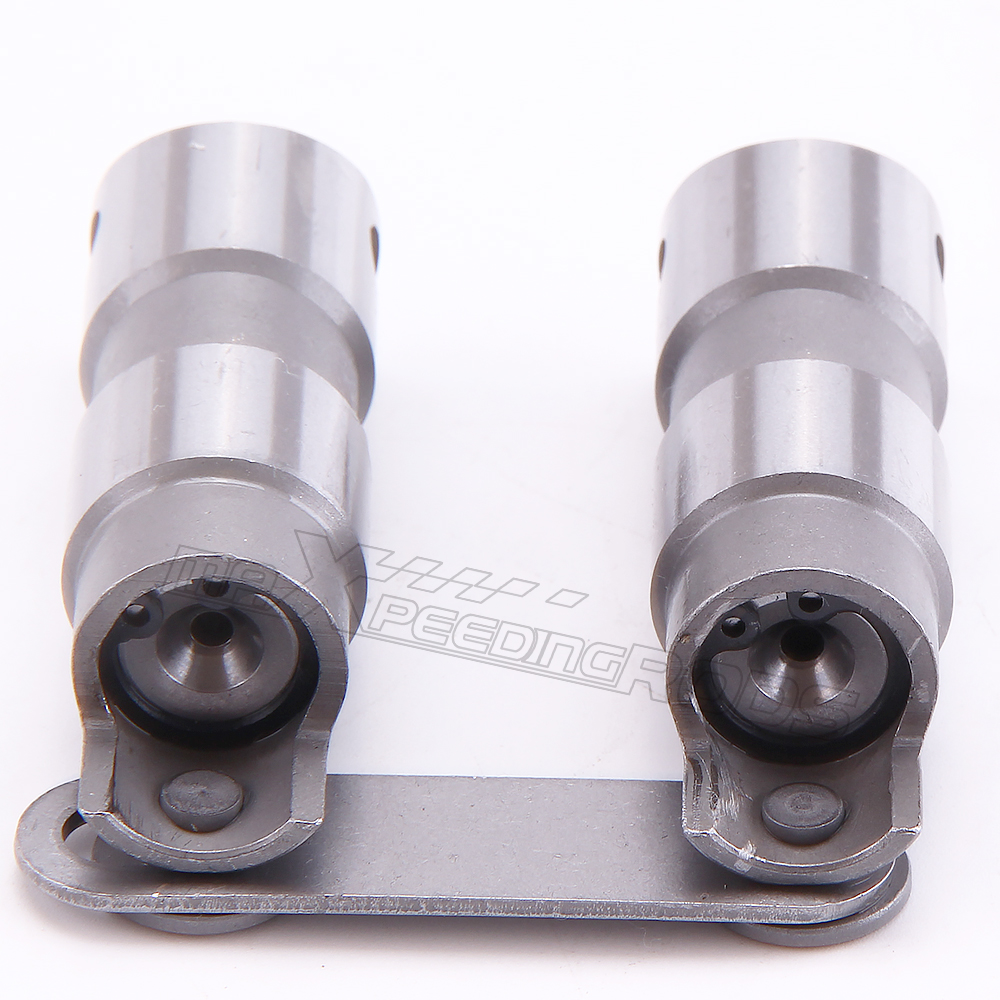 |
Or the "slash cut" Morel type 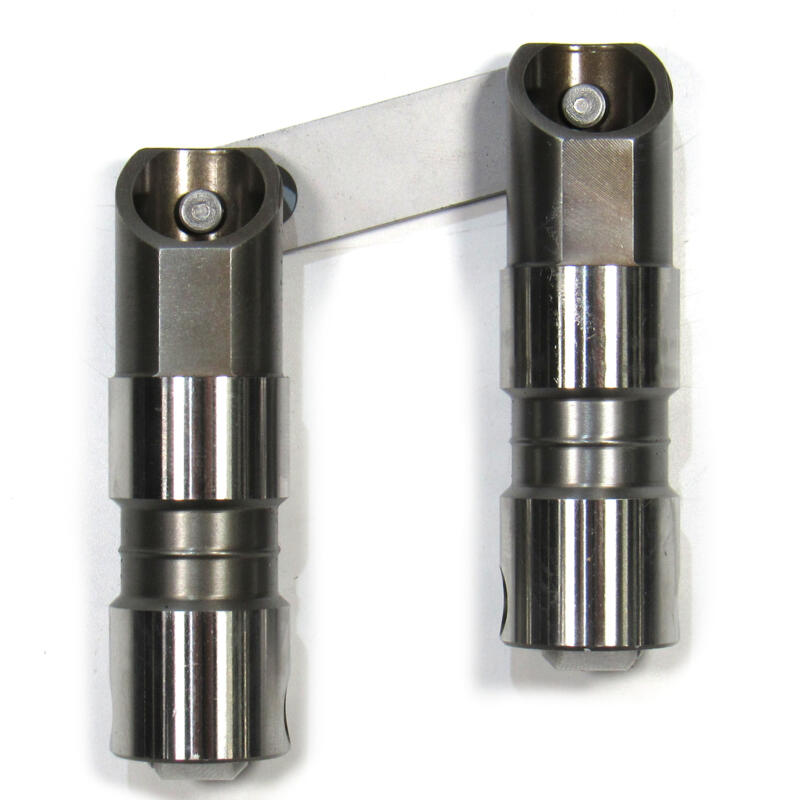 |
I again used AI and asked which lifters had the best and worst reliability. It turns out the Comp Cams style I have were amongst the worse, and Morel's were regarded as amongst the best. So based on this I started looking at Morel 5319 lifters. Based on the "myths" listed above, I contacted their technical department and asked the questions. Here are their answers: Q1: Should they be cleaned before use? A1. No need to clean them before use. The roller bearings have high pressure grease for breakin, and washing in solvent would wash it away Q2. Should they be soak in engine oil before use? A2. No need to soak them in oil. Q3. What is the maximum preload? A3. Max preload is 120thou Q4. What preload is required? A4. 50 thou of preload, which is 1 full turn on a 7/16" rocker adjusting screw (a 3/8 adjusting screw would be 1-1/2 turns for 50thou) Q5. Is there a breakin period? A5. No breakin required. As for oil, they recommend an oil with a "centistoke" value of 15 or less, and that 20w/50 is too heavy. They recommened 10w/30, but I said this was probably too thin for a 1960s designed engine, so they agreed 15w/40 would be OK. Researching oils, 20w/50 has a centistoke value of 160 to 180 at 40C, and 17.5 to 22 at 100c This would explain why it was spoken about on the internent why 20w/50 was too heavy, but no mention as to why as it's a detailed subject. 15w/40 has values of 100 to 120 at 100C, and 12.5 to 16 at 100c, so much closer to the maximum of 15 required. The knowledge and detailed answers from Morel gave me much more confidence than previously, so a set of Morel 5319 lifters have been ordered. The lifters duly arrived, and I was impreesed by them having ACTUAL detailed instructions, and excellent packaging.   Click here for Morel's instructions The new lifters were 1mm shorer than the ones I already had, so after lots of measuring, and allowing for the 0.050 preload required, I ordered a set of Manley 25702-16 pushrods Before ordering the pushrods I ran the calculations through AI to check that the pushrods will be strong enough as the roller cam requires much higher pressure valve springs (400lbs) than the original flat tappaet cam Here are the calculations The pushrods are hollow, with a hole through the centre. This is an oiling hole which allows oil from the lifter to be fed under pressure up the poshrod, and out of a hole in the threads of the adjuster. This oil is then fed through holes on the roller rocker arm to lubricate the roller. Oil hole in the lifter  Oil hole in the end of the rocker adjusting screw  Oil hole in the body of the adjusting screw  Oil holes in the rocker arm 
Tippex marks on adjusters
I thn spun the engine over on the starter motor to make sure all was ok. It was then a case of adding to 15W/40 oil and some zinc breakin additive
Home made gaskets stuck in place on the valley pan gasket and the block
|
|
|